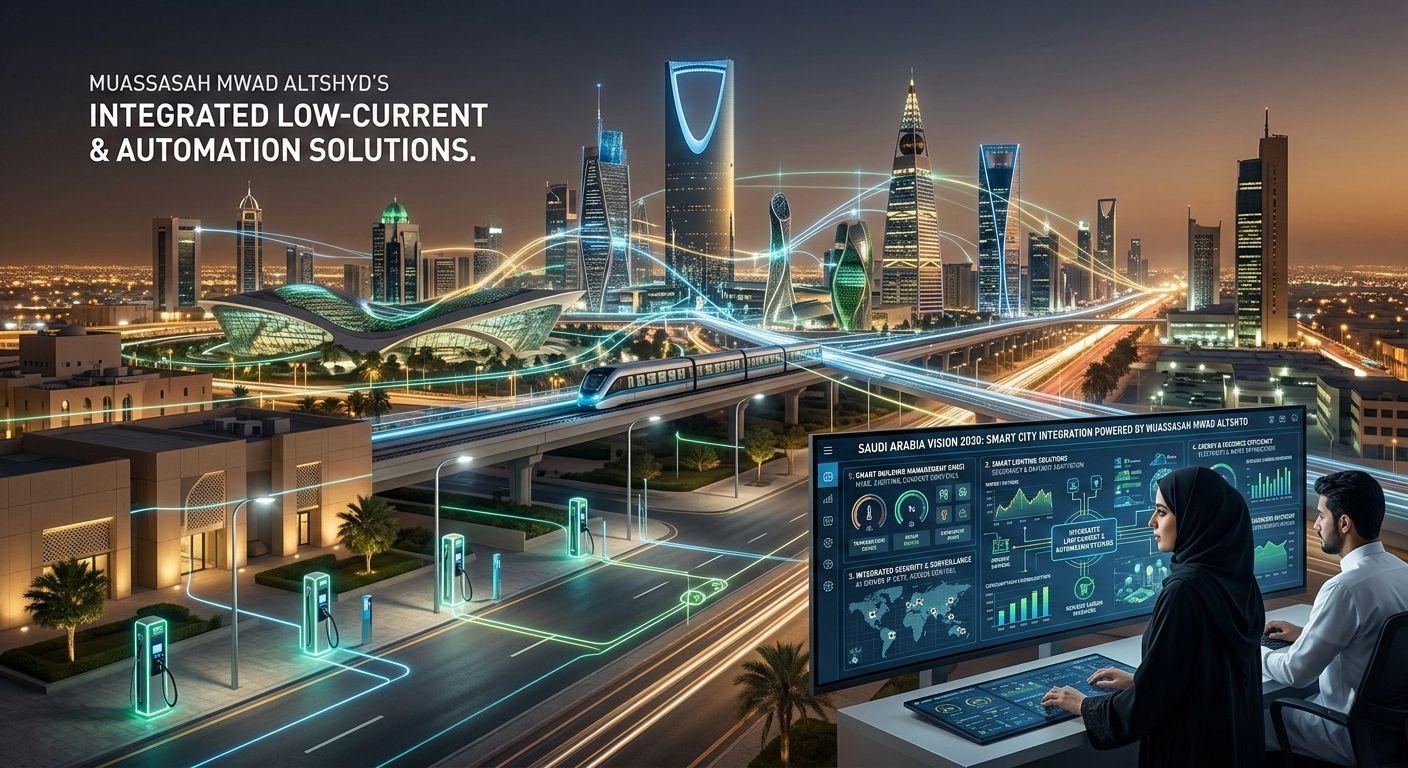
Saudi Arabia is undergoing one of the most ambitious transformations in the world. With Vision 2030 driving rapid urban development, the concept of Smart Cities is no longer a distant idea—it is becoming a national reality.
From Giga Projects to expanding metropolitan hubs, cities across the Kingdom are being designed to be more connected, efficient, sustainable, and secure. But what truly makes a city “smart”? The answer lies in intelligent infrastructure powered by advanced low-current and automation systems.
What Defines a Smart City?
A smart city integrates technology into its infrastructure to enhance quality of life, improve operational efficiency, and reduce environmental impact.
This includes:
- Smart building automation systems
- Integrated security and surveillance
- Intelligent traffic and street lighting
- Energy monitoring and management
- Data-driven decision-making platforms
At the core of all these systems is seamless connectivity and real-time monitoring.
The Role of Smart Infrastructure in Saudi Arabia
Saudi Arabia presents unique environmental and operational challenges — high temperatures, energy demand, and rapid urban growth. Smart systems help address these challenges through automation and intelligent control.
1. Building Management Systems (BMS)
Smart buildings form the backbone of smart cities. BMS platforms allow centralized control of HVAC, lighting, energy, and security systems, reducing operational costs while maintaining comfort and safety.
2. Smart Lighting Solutions
Intelligent lighting systems automatically adjust based on occupancy, daylight, and scheduling — significantly reducing energy consumption across residential, commercial, and public spaces.
3. Integrated Security & Surveillance
IP-based CCTV, access control, and AI-driven monitoring improve public safety and enable proactive incident management.
4. Energy & Resource Efficiency
Smart meters and monitoring platforms optimize electricity and water usage, supporting sustainability goals in a resource-conscious region.
Sustainability and Vision 2030
Smart cities are directly aligned with Vision 2030 objectives — reducing carbon emissions, promoting digital transformation, and creating livable urban environments.
Through intelligent automation, cities can:
- Lower energy consumption
- Improve public safety
- Enhance transportation efficiency
- Reduce maintenance costs
- Increase long-term infrastructure value
The Importance of System Integration
One of the biggest challenges in smart city development is system fragmentation. True intelligence comes from integration — when building automation, lighting, security, and monitoring platforms communicate seamlessly.
This is where experienced system integrators play a critical role.
Our Commitment to Smart Infrastructure
At Muassasah Mwad AlTshyd, we contribute to smart city development through integrated low-current and automation solutions, including:
- Building Management Systems
- Smart lighting control
- Energy monitoring systems
- Integrated security and surveillance
- ELV system integration
Our approach focuses on reliability, scalability, and future readiness — ensuring that infrastructure investments remain sustainable and adaptable for years to come.
Looking Ahead
Smart cities are not just about technology — they are about improving the way people live, work, and interact. As Saudi Arabia continues its transformation, intelligent infrastructure will be the foundation of modern urban life.
At Muassasah Mwad AlTshyd, we are proud to support this journey by delivering smart, efficient, and integrated solutions that help shape the cities of tomorrow.